
The Kindest Way to Guide People in True Meaning
World Teacher’s Message No.323

If we think of “being liked by others” as “fulfilling what the other person wants” or “giving them what they want,” it may sometimes result in making the person worse off, leading them to future failures, or causing trouble for those around them. In the pursuit of true happiness, could you please explain the true meaning of “being liked by others,” as well as any points of caution to keep in mind?
From the Q&A session of the lecture “The laws of being liked by others,” Happy Science Special Lecture Hall, April 27, 2018

[Answer]
From a religious point of view, the story continues even after death, so there may be various ways to live one’s life.
Looking at the whole picture, people who can say they were generally liked by others tend to go to heaven. On the other hand, for those who feel like they were generally disliked by others, though of course, it varies from person to person, and some may like them while others do not. If they were disliked by their family, at work, and by people in general, then I think it’s probably fair to conclude that such people end up in hell.
So, while it’s fine to think about sales techniques, like whether you’re liked or disliked from a technical standpoint as a salesperson, I think it is not just about that. It’s something that ultimately relates to whether your life, in the end, was a success or a failure.
Since it is difficult to bring up “religious truth” directly from the beginning, I’d like to instead present it somewhat as an expedient teaching. I believe that by examining things like “Am I being liked or disliked by others right now? Which side am I on? How are my current actions being perceived?”, through that kind of reflection, it’s possible to guide oneself in a good direction, to lead oneself toward what is right.
Reflecting on Yourself Based on Whether You Would Want It Done to You
In your question, you mentioned something like, “Even if you do something thinking it will be good for someone, it can end up ruining them, and that kind of thing is difficult. ”
In general, the principle often referred to as the “Golden Rule” is expressed as: “Do to others what you would want them to do to you.” Jesus said this, and similar teachings can be found, in different forms, in the words of Buddha, Marcus Aurelius, and various other philosophers. There are many variations of this idea. It’s one of the core concepts that runs through major schools of thought and philosophy.
If you think about it, by asking yourself, “Am I doing for others what I would want others to do for me?”, you can understand whether what you’re doing is appropriate or not.
Therefore, if what you’re doing for someone ends up being like spoiling them like giving them sugary sweets that cause cavities and if that ultimately leads to their downfall in the future, then even if someone did the same for you, you too would fall into decline, led astray by sweet words like sugar that cause tooth decay. In that sense, it may not actually be true kindness.
Even if you speak or act in a way that seems like you’re giving love to others or trying to be liked, if it doesn’t come from your true feelings or sincerity, but instead from a desire like “I want this person to like me” or “I want to protect my position,” then it becomes flattery or ingratiation for the sake of self-preservation. When you’re trying to get through a difficult relationship for your own protection, you might say or do things that please the other person, or flatter them as a kind of bribe. But if you go too far with that, I think ultimately, you’re doing something that you yourself wouldn’t really want others to do to you.

Let Go of False Selves and Conceit, and Return to a Pure Heart
Some people might respond, “Even if you say that, it’s a bit too difficult,” or “That’s a bit too religiously pure.” Others might say, “if you’re human, of course you feel happy when someone praises you, gives you something, or gives you money. What’s wrong with that?”
I think it was in Tsuresuregusa or something similar, where among the descriptions of “good friends,” there was actually one that said something like “a person who gives you things” (laughs). I believe it said something along the lines of, “You’re happy when someone gives you things.” It’s true that receiving something doesn’t usually make you feel bad.
However, if it goes too far, you might start to wonder, “Is there some hidden motive behind this?” In other words, if someone does something for you that’s beyond what’s necessary, or if they give you a gift in return as a thank-you but the amount or value is too large, or if the return gesture is just too much compared to what you did for them, some people might start to think, “Is there something behind this? Are they planning something?” This sort of thing can be quite tricky and delicate.
However, the basic idea, as I mentioned earlier, is to let go of things like the false self and conceit, and try to return to as pure a state of mind as possible. Then, reflect and ask yourself: “Is this something I would want done for me if I were in the other person’s place?”
When it comes to praising someone, giving them something, or putting them in a certain position, if you think, “if I were in their place, I’d want someone to do that for me,” then it’s okay to do it. But if you think, “If I were in their shoes, receiving that right now would actually ruin me,” then you need to hold back a little. And if you think, “If it were me, I’d want someone to warn me in a situation like this,” then there are times when it’s better to give that warning.

Country People Are Bad at Flattery
This is something I’ve experienced myself, but people from the countryside are, generally speaking, not very good at flattery. When they try to flatter someone, it just ends up looking like insincere buttering up, and they don’t do it very well.
I’ve been living in Tokyo for forty years now, so I can’t really call myself a country person anymore. In fact, I’m often seen as a part of the “urban crowd” these days. But in my first few years in Tokyo, what I strongly felt was that there are so many people who say things they don’t really mean. That impression was very strong.
People in the countryside don’t go that far with their words. It’s all too obvious so when it’s between people from the countryside, there’s really no way to complement each other. It’s like, “Well, just look at me, you can see for yourself,” and even if someone tries to give a compliment, everyone can tell it’s not genuine – that it’s a lie. So there’s no point in complimenting. In a way, they just don’t say anything to each other.
People in Tokyo, on the other hand, are good at coming up with words and making things sound nice or acting kind. They’re good at that kind of thing. Honestly, I often got taken in by it and later realized, “Wow, that wasn’t what they really meant.”
One typical thing is that people say things like, “Let’s go there sometime,” or “Let’s have a drink together again soon,” or “Come visit my house again sometime” at the end of a conversation. But if you take that seriously, it turns out it’s not really meant that way.
It’s just words. They’re just saying it as a kind of greeting or social custom. If you take something like “Come visit again” seriously and actually go, after you leave they might say something like, “Ugh, they stayed so long. It was such a bother. I wish they had left sooner. I even had to prepare dinner for them.”
In the countryside, though, people can be surprisingly direct. If it’s really inconvenient, they might just say, “I can’t do that,” or “I won’t be able to make dinner.” That kind of thing happens pretty often.
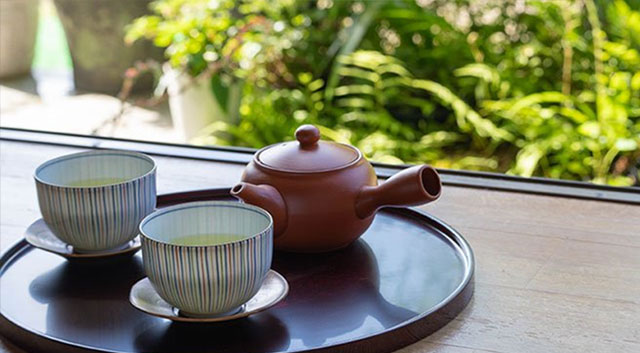
Photo:PIXTA
People in Tokyo Are Good at Putting on a Front in the Moment
Also, even if they don’t really mean it deep down, city people often lie.
For example, in a story from one of my relatives, my cousin broke his leg skiing or something and was hospitalized. When I went to visit him in the hospital, his mother, my aunt, said, “My son says he’ll send you something once he’s discharged.”
So I kept waiting and waiting, wondering what he would send after he got out of the hospital. But nothing ever came. It was just words. But in the countryside, people take those things seriously. So I just kept waiting. Really, I was thinking, “Hasn’t he been discharged by now? His leg must be healed by now. Maybe he’ll send something soon.” And I was seriously, patiently waiting.
In the case of people from the countryside, for example, if they say, “I’ll buy you a Christmas present,” they’ll probably follow through, like 90-something percent of the time. But if it’s someone from Tokyo, even if they say that, they’ll forget after a month. Or rather they might forget in just two or three days. Of course, part of it is because they’re busy, but sometimes it’s also because they didn’t truly mean it. They’re just good at smoothing things over in the moment.
There Are Cultures and Customs Where People Say Things They Don’t Really Mean
This isn’t just in Tokyo. It happens in places like Kyoto as well. There’s a culture where people often say things that don’t reflect their true feelings, and sometimes it’s like they’re testing you. For example, when someone says ‘Please come in,’ it’s not always clear if they genuinely mean it. They might give you lots of compliments too, but after it’s over, people might still criticize you for ‘not knowing proper manners.’
So when I didn’t know any better, I once went over for a brief visit. They told me, ‘Come in,’ ‘Stay and chat for a while,’ and so I did. Then they said, ‘Would you like some ochazuke (tea over rice)?’ and I said, ‘Sure,’ and ate it. But afterwards, I heard people think, ‘Wow, how clueless can you be?’
In Kyoto, when someone says, “Would you like some ochazuke (tea over rice)?” It actually means, “it’s about time you left,” but you wouldn’t know that, right? You hear “just some ochazuke,” and you might think, “Oh, they’re not offering a full meal, but maybe they’re inviting me to have a light bite before I go,” so you say “Sure” and accept. It sounds kind of like when someone says, “It’s just a small gift,” so you think it’s a polite gesture, like, “We don’t have much, but if you’d like a little something…” and so you say “Yes.” eat, and leave… They will serve you something. If you say you’d like to eat, it will actually come out. But afterwords, people will question you, wondering, “Is he just thick-headed? Does he have any sense or awareness?”
Because people say things like this, well…the language and expressions can be quite tricky. These kinds of cultural aspects also involve certain manners or etiquette, so it’s something you really can’t understand without experiencing it firsthand.
There are definitely some parts that are influenced by bias or cultural filters, but at the core, it comes down to this: ‘Would I want someone to say or do that to me?’ Or conversely, ‘Would I want someone to point it out or help me correct it?’
(end)